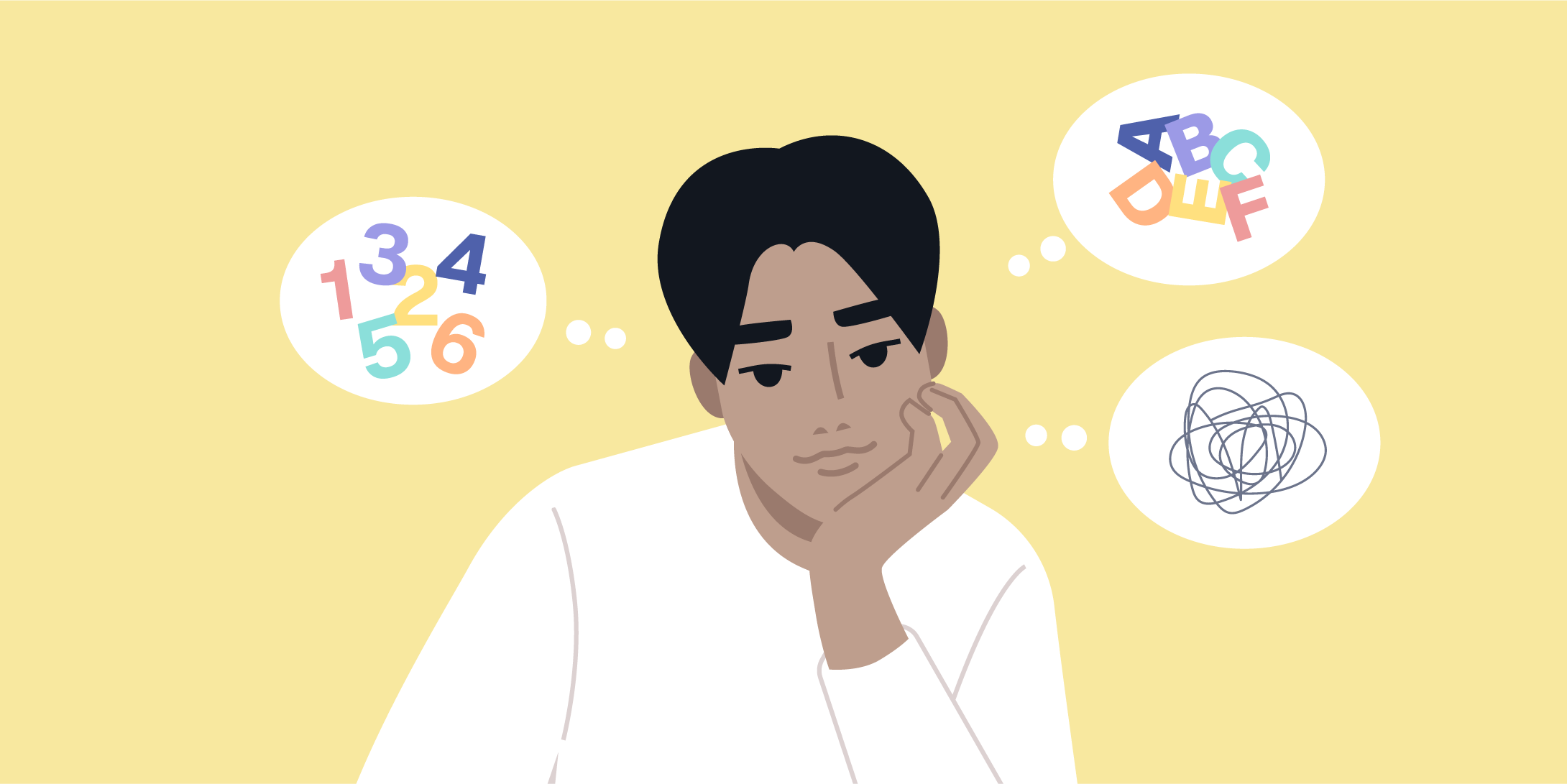
If someone has a specific learning difficulty, or SpLD for short, it means that words and/or numbers are harder to process for them than for other people.
It has nothing to do with how clever they are; it just means they might find tasks with words or numbers harder than other people do.
To help everyone understand and support all kinds of minds, it is important to learn about the different types of SpLDs and how they change the way a person experiences learning.
What does SpLD stand for: disorder, difficulty, or difference?
You may have heard the abbreviation SpLD used to mean a few different things, including:
- Specific learning disorders
- Specific learning difficulties
- Specific learning differences.
In the UK, ‘specific learning difficulty’ is the standard legal and educational term used by bodies like the SpLD Assessment Standards Committee (SASC). We typically use the term ‘difficulty’ or ‘difficulties’ for this reason.
While you may see terms like specific learning disorders used elsewhere, at ProblemShared, we are committed to a strength-based approach to mental health care.
This means that we focus on a person’s strengths, rather than defining them by their challenges, which is why you may also see us refer to specific learning differences when appropriate.
What are some of the most common SpLDs?
Specific learning difficulties cover a few different conditions. Three of the most common ones you might hear about are:
- Dyslexia: This mostly affects reading and spelling. It can make it tricky to match letters to their sounds, read smoothly, or spell words correctly. We’ve written an article that explains the symptoms of dyslexia in more detail.
- Dysgraphia: This makes it hard to write things down by hand. It can affect how neat handwriting is and how fast someone can write. People with dyslexia often have difficulties with writing, too. At ProblemShared, dysgraphia sits under the umbrella of dyslexia and is not a standalone diagnosis.
- Dyscalculia: This makes it hard to understand numbers, like recognising that 10 is greater than 2. We’ve also written an article that explores the symptoms of dyscalculia.
- SpLD maths: Unlike dyscalculia, a person with SpLD maths may understand numbers perfectly well, but struggle in other areas like remembering the steps in a long maths problem. The SASC included this form of SpLD in their 2025 updated guidance.
Another condition you might hear about is dyspraxia. This affects coordination, which can make things like catching a ball, balance, or doing up shirt buttons a bit difficult.
Everyone is unique, and it is common for a person with an SpLD to have more than one of these learning difficulties at the same time.
How do SpLDs impact a person’s life?
An SpLD can impact a person’s experience at school or work, but it is different for everyone.
Someone might find certain subjects tough while being amazing at others, or they may even be good at one aspect of a subject, but not so good at another. For example, in an English class, a student with dyslexia might find it hard to read a book quickly, but they might be fantastic at thinking up creative ideas or telling stories.
People with learning differences can be creative, excellent communicators, pattern spotters, and problem solvers.
How to support children with an SpLD in the classroom
Educators have a very important job in making sure the classroom is a happy, welcoming place where everyone can do well.
Here are some of the best ways teachers can help students with an SpLD:
- Instead of just talking to the class, teachers can use pictures, videos, or break big projects down into smaller, easy steps.
- Lessons are much easier to remember when you can do more than just listen. Doing hands-on experiments or using objects you can touch makes learning much more fun and interactive. This is known as multisensory learning.
- Computers and tablets can be a massive help. Students can use assistive software that reads text out loud to them, or programs that let them speak into a microphone instead of typing.
- Knowing exactly what is happening next helps everyone feel calm. Teachers can use visual timetables or checklists so students always know what to expect and don't get worried about changes.
- Teachers, parents, and school helpers need to talk to each other often. When everyone works together, they can make sure a student gets the same great support at school and at home.
When students get the right help for their unique brains, they can grow in confidence and do amazing things - both inside the classroom and out in the real world!
By embracing inclusivity both inside the classroom and beyond, we can ensure everyone has the best chance to succeed in life.
If you are the parent of a child you believe may have an SpLD, we have written two articles to help you support your child at school:
SpLD assessments with ProblemShared
At ProblemShared, we offer online specific learning difficulties assessments. We are a CQC-registered online mind health service, offering the highest quality mental health care and post-diagnostic support – including our Education Navigation programme to support neurodiverse children at school.
All of our SpLD clinicians are regulated by SASC (SpLD Assessment Standards Committee), follow best practice guidelines and a strict code of conduct to ensure you or your child receive the best care possible.
If you are looking for help for yourself, you can read more about our specific learning difficulty assessments for adults. If you want to support a young person, you can find more information about our services on our SpLD assessments for children page.

