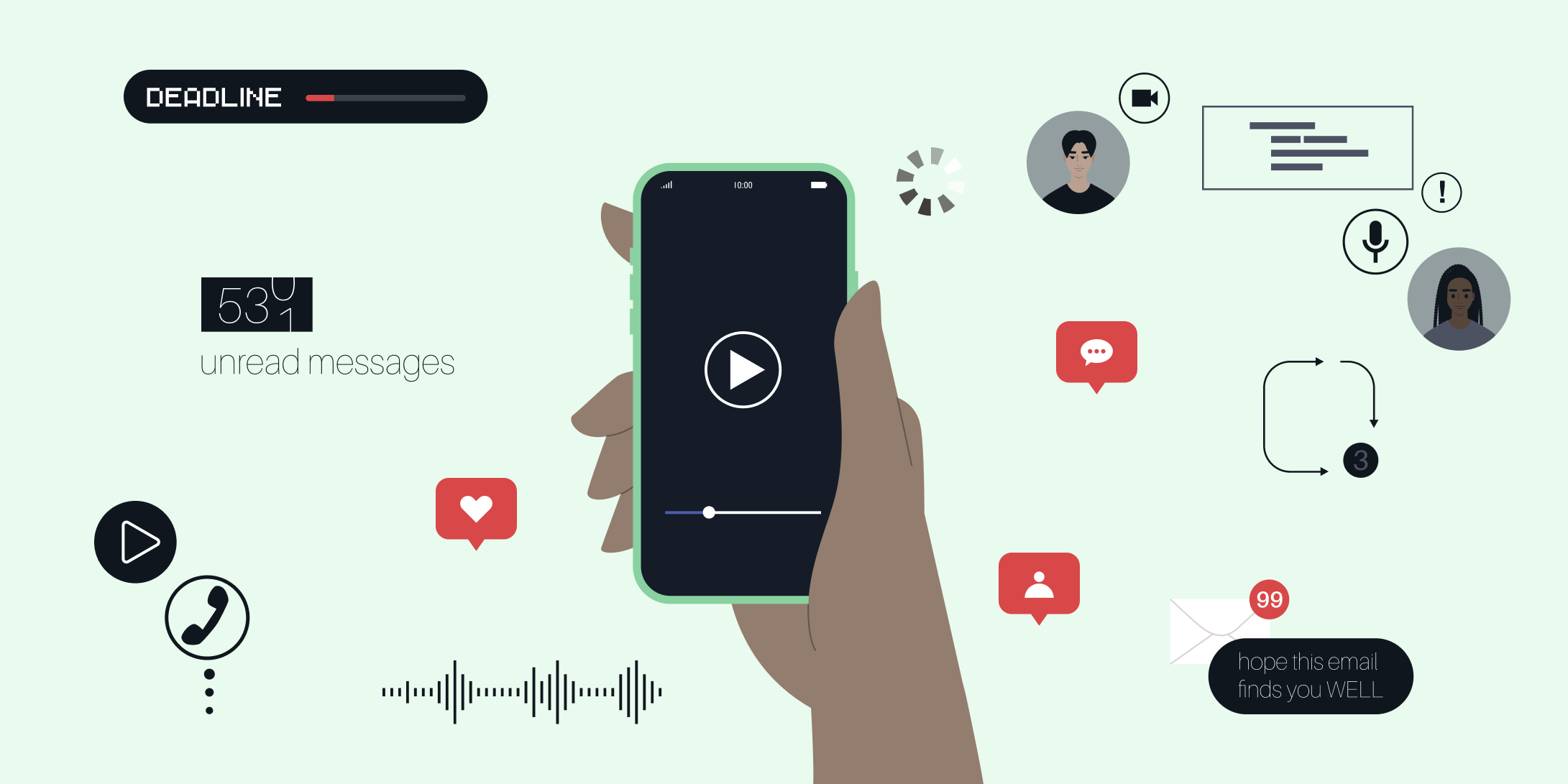
We live in a world packed with technology, with many of us are staring at screens from the moment we wake up to the second we go to sleep.
Whether it's playing games, watching videos, or checking group chats, our phones and tablets are constantly buzzing for our attention.
But having all these screens around us every day can affect how we feel. In this article, we'll look at what all this screen time does to our minds and why taking a break might be the best way to recharge our batteries.
What is digital fatigue?
Lots of us start our day by looking at a screen, whether it's checking a phone before work or using a computer in the classroom. We might also spend time scrolling through social media to see what our friends are up to.
Then, when it’s time to relax in the evening, we usually turn on the television to watch a film or switch on a games console.
Spending all this time staring at screens can make us feel really worn out. This is called 'digital fatigue'.
Also known as ‘screen burnout’, digital fatigue is when your brain and body feel completely exhausted from using technology too much.
Some common signs of digital fatigue include:
- Feeling very tired
- Finding it hard to concentrate
- Feeling sad or grumpy
- Having trouble sleeping
- Headaches
- Sore or itchy eyes
- Not wanting to do anything (a lack of motivation)
- Feeling worried or overwhelmed.
Why does a digital detox matter?
Technology is amazing, but too much screen time can affect how we feel. Scientists have found that teenagers who spend seven or more hours a day on screens are twice as likely to feel sad or anxious compared to those who only use them for an hour.
Here is how stepping away from your devices can help:
- Better friendships: If your face is hidden behind a screen, you miss out on what's happening around you. Putting your device down gives you time to talk, play, and connect with family and friends.
- Feeling calmer: Constantly checking notifications can make you feel worried. A digital detox gives your mind a break so you can relax.
- Better sleep: Looking at screens before bed tricks your brain into thinking it's still daytime, making it much harder to sleep.
- More energy and focus: Taking a break recharges your brain so you can concentrate better on schoolwork or hobbies.
- Fewer aches and pains: Stepping away is the best way to get rid of screen headaches and sore, itchy eyes.
Screen burnout can affect everyone differently, but if you have ADHD or autism, spending too much time on screens can sometimes make daily challenges feel even harder, so taking regular breaks is extra important.
How to digitally detox
So, what can we do to beat screen burnout? Here are six easy tips to help you stay healthy and happy:
- Take regular breaks: Step away from your screens throughout the day to give your brain a rest.
- Try the 20-20-20 rule: Every 20 minutes, look at something 20 feet away (about six metres) for 20 seconds. This stops your eyes from getting tired.
- Set tech-free zones: Keep certain times and places completely screen-free, like the dinner table or your bedroom.
- Get a better night's sleep: Put your devices away at least an hour before bed or switch them to 'night mode' so the bright light doesn't keep you awake.
- Find screen-free hobbies: Spend time doing things that don't need a screen, like reading, playing sports, drawing, or going outdoors.
- Hang out in real life: Spend time talking and playing with your friends and family face-to-face instead of just messaging them.
At the end of the day, technology is a fantastic tool for learning, gaming, and staying connected. But just like anything else, too much of it can be bad for us.
By taking regular breaks, setting screen-free zones, and making time for real-world fun, you can enjoy all the best bits of technology without the screen burnout.