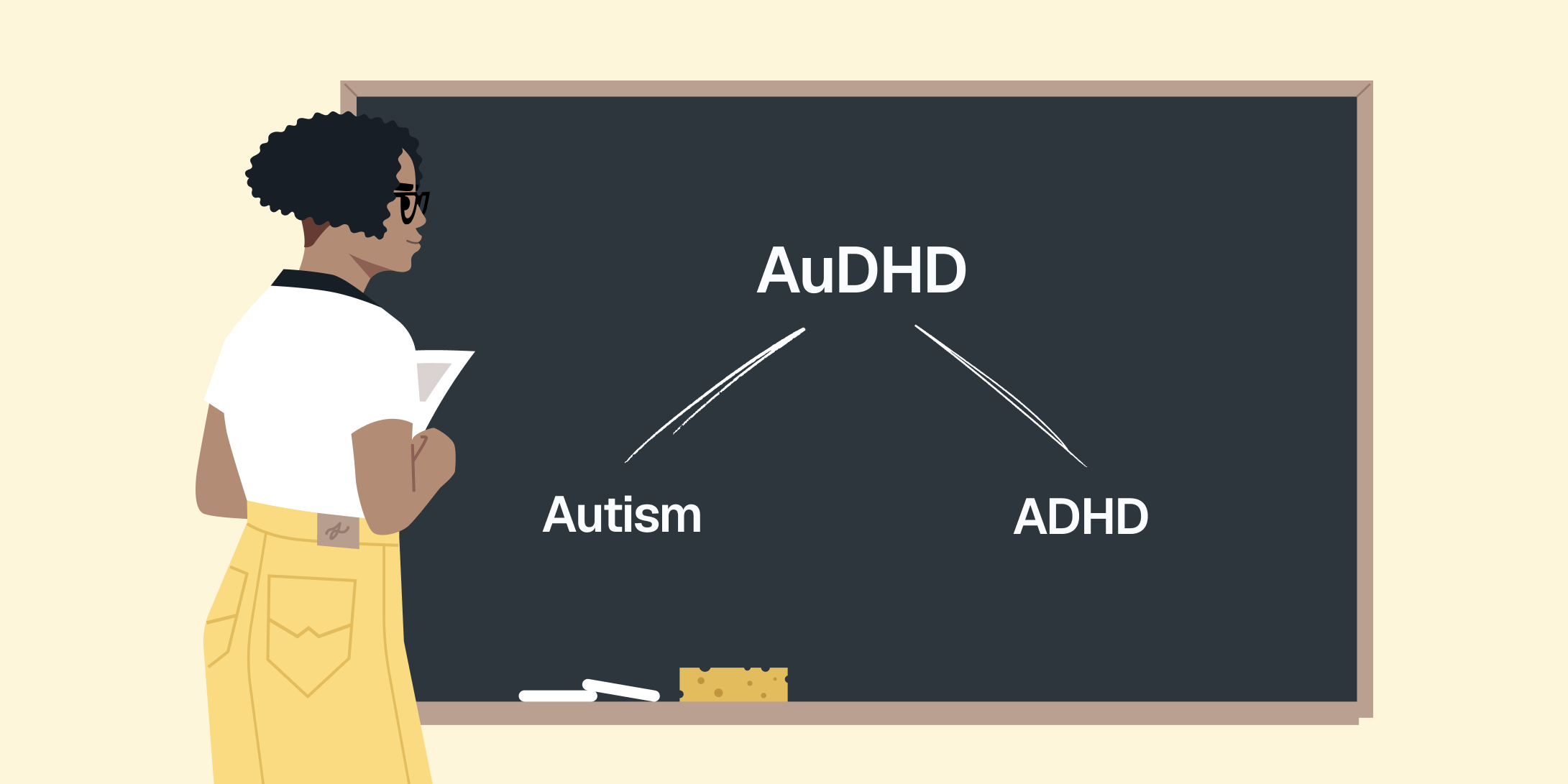
AuDHD is when someone has been diagnosed with of both autism and ADHD.
The term AuDHD is not officially recognised as a medical term, but has gained popularity as a simple, shorthand way of describing being autistic as well as having ADHD.
Research has shown that 30-80% of autistic people show signs of ADHD, and that 20-50% of people with ADHD may also be autistic.
People with both conditions may experience conflicting symptoms; for example, a potential need for structure and routine in autism could contrast with impulsivity in ADHD.
Understanding autism and ADHD
To properly understand AuDHD, it helps to first look at autism and ADHD on their own. Both are neurodevelopmental conditions that affect how the brain processes information – but they both affect the brain in different, and sometimes contrasting ways:
- Autism (also known as autism spectrum disorder, or ASD) can affect social interactions and communication, among other things. An autistic person may also prefer specific routines or have a deep and passionate interest in certain topics. Please visit our full guide to autism for a deeper dive.
- ADHD (attention deficit hyperactivity disorder) can make it hard for someone to sit still, pay attention, or to keep things organised. It can also relate to impulsive or hyperactive behaviour. Please visit our guide to ADHD for more information.
When we describe someone as being AuDHD, we mean that they are experiencing symptoms of both autism and ADHD.
Sometimes, these conditions can ‘clash’ – for instance, an AuDHD person may have a strong desire for routine and structure (autism) but be unable to commit to those routines because of their impulsivity (ADHD). These clashes can create feelings of confusion and frustration.
Other times, the two conditions can result in unique strengths, such as creativity, higher energy levels, and intense focus.
Are people diagnosed with AuDHD?
It's important to first understand that AuDHD is not an official diagnosis or medical term yet. You cannot be diagnosed with AuDHD, and the term will not appear on a formal diagnostic report. A doctor is more likely to refer to AuDHD as a dual diagnosis.
Instead, someone with AuDHD will need to be diagnosed with both autism and ADHD by specialists trained to assess people for these neurodevelopmental conditions.
This means you would need to receive both a diagnosis of autism and a diagnosis of ADHD from two separate assessments.
Neurodivergent communities and those discussing their experiences online have coined the term AuDHD to accurately reflect the experience of those with both autism and ADHD, but a clinician will not diagnose you with AuDHD.
How to support someone with AuDHD
If you know someone with a dual ADHD and autism diagnosis, there are ways you can help to make their lives more comfortable:
- Clear communication: Speak plainly and directly. Avoid long, confusing instructions or vague directions.
- Sensory-friendly spaces: Make sure rooms are not too bright or loud. Having access to fidget toys, noise-cancelling headphones, or a quiet corner of the house can help a person manage feelings of overwhelm.
- Predictable routines: Knowing what to expect can create a feeling of calm. If plans have to change, giving plenty of notice can help make the change feel more manageable.
- Targeted school support: Teachers can help by breaking big tasks into bite-sized chunks, keeping classroom rules clear, and giving extra time for short breaks where pupils can get up and move around. Visual timetables (such as daily schedules with pictures, checklists or written steps) can also be helpful.
- Helpful therapies: Working with specialists, like occupational therapists, can help people learn new ways of managing their daily routines, balance energy, and handle sensory challenges.
Remember that everyone is different, and what works for one person may not work well for another. The important thing is working with each person to understand what support they need to be at their best.
How ProblemShared can help
If you think you may be AuDHD, we can help.
We've been assessing patients for autism and ADHD for a number of years; our assessments are completely remote, allowing you to access clinical support from the comfort of your own home.
The NHS have approved our service to deliver free ADHD and autism assessments through Right to Choose. You can ask your GP to refer you to our service.
Our current assessment wait times are available on the Right to Choose page; please be aware that our ADHD medication wait times are separate to our assessment wait times.
You can also check out our free ADHD and autism quizzes - short online tests intended to help you understand whether your current experiences match with the symptoms of autism or ADHD.
While the screener cannot replace the clinical rigour of a professional diagnosis, it can help you understand whether an ADHD or autism assessment would be in your best interests.