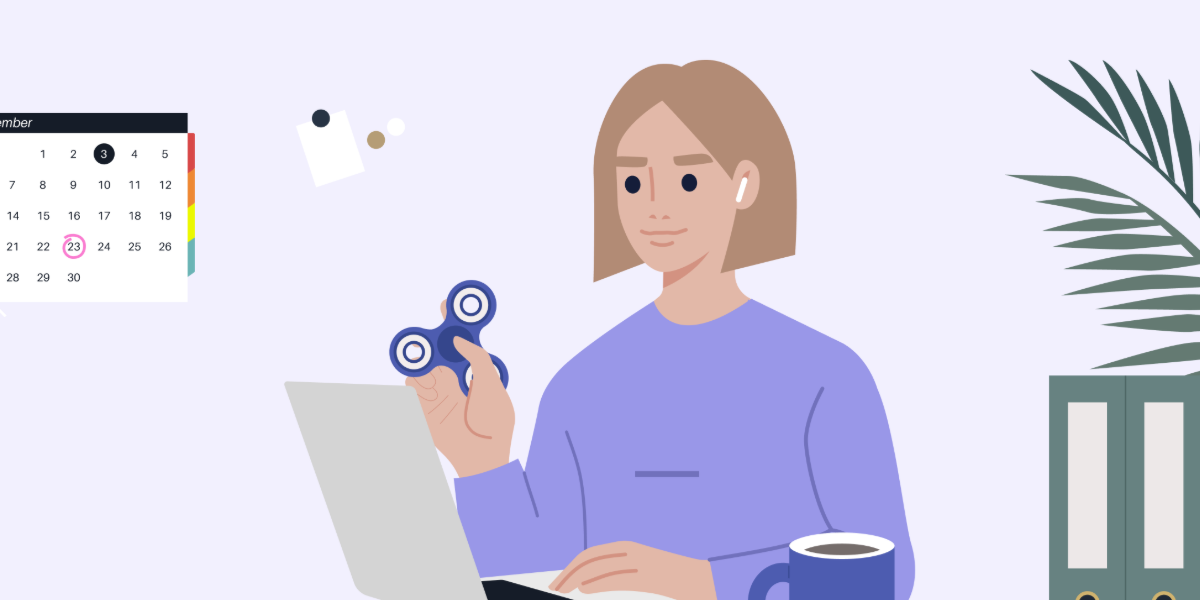
An autistic person or someone with ADHD may engaging in stimming - or self-stimulating - behaviours. These are repetitive movements, sounds, or actions such as tapping, hand flapping, or rocking back and forth.
Stimming may be used as a coping mechanism by neurodivergent people to manage overwhelming feelings, like stress or anxiety, although the exact reason for stimming will be different for each person.
Common types of stimming behaviours
Almost everyone engages in self-stimulating behaviours from time to time, like humming, tapping their feet, or playing with their hair.
We use these behaviours as a way of staying focused, reducing anxiety, expressing ourselves, or sometimes because we are just fidgeting without realising it. In autism and ADHD, these behaviours are similar, though can often be more pronounced.
Examples of stimming can include:
- Hand-flapping
- Rocking
- Finger-flicking
- Hair twirling
- Repeating words or phrases
- Bouncing or jumping
- Pacing or walking on tiptoes
- Rearranging or organising objects.
A 2019 survey found that 80% of autistic people enjoyed stimming to help them manage their anxiety.
Instead of discouraging stimming, we should focus on ensuring environments are inclusive and understanding, where people feel free to express themselves authentically.
What is autistic stimming?
Stimming is commonly associated with autism; autistic people may stim as a way to manage overwhelming emotions, providing a sense of control and predictability, or create a soothing rhythm that can help them manage their emotions.
Some autistic people will stim as a form of self-expression. Stimming may help them express their feelings to others, which can be very useful if they are too nervous or anxious to talk about their emotions.
However, stimming can sometimes interfere with a person’s daily life or pose a safety risk (such as causing themselves deliberate or accidental harm). An autistic person may need to look for strategies to help them manage or redirect harmful stimming behaviours towards safer, more positive ones.
Stimming in ADHD: similarities and differences
A person with ADHD may also use stimming behaviours, but not always for the same reasons as an autistic person.
Stimming in people with ADHD can be more commonly related to impulsivity and hyperactivity rather than as a coping technique. It may be used to reduce boredom, release energy, stay alert and engaged, or relieve the stress of having to stay focused on one thing for a long time.
These stimming behaviours are just as important to a person with ADHD as they are to an autistic person.
How to manage stimming behaviours
It is important to be kind and sensitive when speaking to someone about their stimming behaviours. Remember, a person may not even realise they are stimming, or may be stimming to regulate their emotions.
Here are a few helpful tips if you are looking to help someone manage their stimming:
- Make a safe and private space where people can stim without feeling self-conscious or judged.
- Offer other activities or objects that can substitute for stimming, like fidget toys or stress balls.
- Give people regular breaks to help them manage feelings of overwhelm.
- Try breathing exercises or mindfulness techniques to help them manage their emotions.
Research has shown that suppressing stimming behaviour can make a person more anxious, upset, or make it harder for them to concentrate.
It is important to be patient with a neurodivergent person as they begin to understand and manage their stimming.
How can ProblemShared help?
As we’ve discussed, stimming may be a sign of a neurodevelopmental condition such as autism or ADHD.
We’ve created two short, simple, online quiz-like screeners to help you better understand whether your lived experiences tally with the symptoms of ADHD or autism:
While it’s important to remember that these screeners do not constitute a clinical diagnosis, they can help you to better understand whether a professional assessment would be of benefit to you.
We also offer online ADHD and autism assessments if you would like to pursue a clinical assessment. You can find out more about on services on our:
- Autism pages, for adults and children
- ADHD pages, for adults and children
- Specific learning differences pages, for adults and children.